
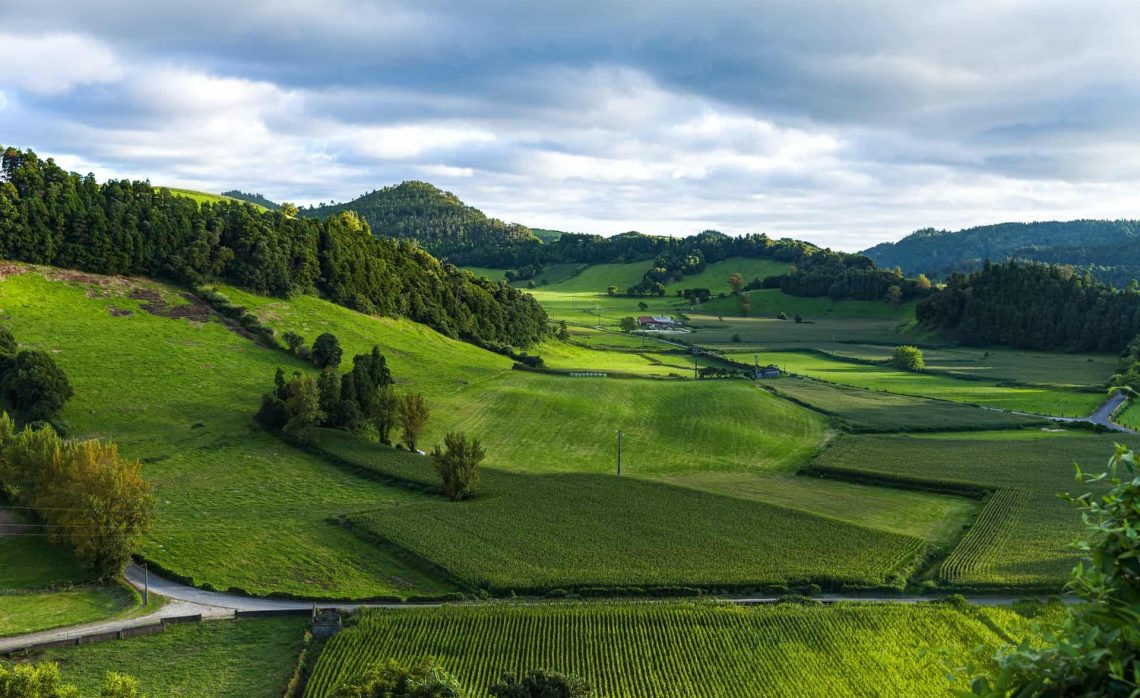
In the Parable of the Sower, Jesus illustrates 4 types of heart soils as He illustrates a farmer sowing his seeds in 4 types of soil:
- Roadside Soil
- Rocky Soil
- Thorny Soil
- Good Soil
A “parable could be defined many ways, but the working definition here is that it is a true-to-life story designed for teaching some specific spiritual truth usually pertaining to the King, the kingdom of God, or the citizens of the kingdom. Often seeds would be scattered on the ground from leather pouches as a farmer walked the field. Sometimes the fields were plowed, then seed scattered, and fields plowed again.”
“In the parable, some seeds fell beside the road where footpaths often bordered the fields. There were rocky places just below the surface of the soil in many areas. The plant could grow, but eventually withered under the sun because it did not get the moisture or nutrients it needed. Thorns often grow when no other plants will. In the rugged terrain of Israel, they can take over an area so the crops are choked.” [Moody 1475]
Foundations for the 4 Types of Heart Soils
Matthew 13 “records the events of a crisis day in the ministry of Jesus Christ. He knew that the growing opposition of the religious leaders would lead to His crucifixion. Our Lord’s use of parables puzzled the disciples. The word parable means ‘to cast alongside.’ It is a story, or comparison, that is put alongside something else to help make the lesson clear. But these are not ordinary parables; Jesus called them ‘the mysteries of the kingdom of heaven.’” [Wiersbe 37]
“The mysteries of the kingdom of heaven. Mysteries are those truths which have been hidden from all ages in the past and revealed in the New Testament.” [MacArthur 1148]
“In the New Testament, a ‘mystery’ is a spiritual truth understood only by divine revelation. Why did Jesus teach in parables? Two reasons were given: because of the sluggishness of the people and because it was prophesied in Psalm 78:2.”
“Jesus did not teach in parables to confuse or condemn the people. Rather, He sought to excite their interest and arouse their curiosity. These parables would give light to those with trusting, searching hearts. But they would bring darkness to the unconcerned and unrepentant.” [Wiersbe 37]
Seeds for the Kingdom
“The parable of the sower does not begin with ‘the kingdom of heaven is like’ because it describes how the kingdom begins. It begins with the preaching of the Word, the planting of the seed in the hearts of people. The seed is God’s Word; the various soils represent different kinds of hearts; and the varied results show the different responses to the Word of God. Jesus explained this parable so there is no doubt of its meaning.”
“Why compare God’s Word to seed? Because the Word is ‘living and powerful’ (Hebrews 4:12). Unlike the words of men, the Word of God has life in it, and that life can be imparted to those who will believe. The truth of God must take root in the heart, be cultivated, and be permitted to bear fruit.”
“It is shocking to realize that three fourths of the seeds did not bear fruit. Jesus did not describe an age of great harvest, but one in which the Word would be rejected. He was not impressed with the ‘great multitudes’ that followed Him, for He knew that most of the people would not receive His Word within and bear fruit.” [Wiersbe 37]
Roadside Soil
Jesus said, “Some seeds fell by the roadside, and the birds came and devoured them.” [Matthew 13:4]
Jesus explained the parable to His disciples, “Hear, then, the parable of the farmer. When anyone hears the word of the Kingdom and doesn’t understand it, the evil one comes and snatches away that which has been sown in his heart. This is what was sown by the roadside.” [Matthew 13:18-19]
“By the wayside. People will make paths along the edge of a ploughed field or even across it where the seed lies upon the beaten track.” [Robertson 102]
“Wayside. The fields were bordered by paths beaten hard by foot traffic and baking sun.” [MacArthur 1148]
“The evil one comes and snatches away. The birds pick up the seed while the sower sows. The devil is busy with his job of snatching or seizing like a bandit the word of the kingdom before it has time to sprout. The seed sown in the heart and the seed sown by the wayside are identified. The seed in the heart is not of itself responsible, but the man who lets the devil snatch it away.” [Robertson 106]
“The gospel never penetrates these souls, so it disappears from the surface of their understanding, here seen as the enemy’s snatching it away.” [MacArthur 1149]
Rocky Soil
Jesus continued speaking, “Other seeds fell on rocky ground, where they didn’t have much soil, and immediately they sprang up, because they had no depth of earth. When the sun had risen, they were scorched. Because they had no root, they withered away.” [Matthew 13:5-6]
Jesus described the rocky soil. “What was sown on the rocky places, this is he who hears the word and immediately with joy receives it; yet he has not root in himself, but endures for a while. When oppression or persecution arises because of the word, immediately he stumbles. [Matthew 13:20-21]
“The rocky places. In that limestone country ledges of rock often jut out with thin layers of soil upon the layers of rock.” [Robertson 102]
“Stony places. Very shallow soil on top of a layer of bedrock. From the top it looks fertile, but there is no depth to sustain roots or reach water.” [MacArthur 1148]
“In the parable, the sun represents persecution that comes because of the Word. Persecution helps believers grow. But the sunshine will kill a plant with no roots. This explains why some ‘believers’ do not last: Their faith was weak, their understanding was meager, and their decision was not sincere. Unless there is fruit in the life, there is not saving faith in the heart.” [Wiersbe 37-38]
“Stony places. Some people commit themselves to Christ in an emotional, superficial way, but that commitment is not real. They remain interested only until there is a sacrificial price to pay and then abandon Christ.” [MacArthur 1149]
“He has no root in himself. Stability like a tree. Here the man has mushroom growth and ‘endures for a while,’ temporary, quick to sprout, quick to stumble. What a picture of some converts in our modern revivals. They drop away overnight because they did not have the root of the matter in them. This man does not last or hold out.” [Robertson 106]
Thorny Soil
Jesus observed, “Other seeds fell among thorns. The thorns grew up and choked them.” [Matthew 13:7]
Jesus expounded, “What was sown among the thorns, this is he who hears the word, but the cares of this age and the deceitfulness of riches choke the word, and he becomes unfruitful. [Matthew 13:22]
“Thorns. Weeds, the roots of which were still in the ground after plowing had been done.” [MacArthur 1148]
“The thorns grew up. Not ‘sprang up’ as in verse 5, for a different verb occurs meaning ‘came up’ out of the ground, the seeds of the thorns being already in the soil, ‘upon the thorns’ rather than ‘among the thorns.’ But the thorns got a quick start as weeds somehow do and ‘choked them,’ ‘choked them off’ literally. [Robertson 102-103]
“Tribulation. The English word is from the Latin tribulum, the roller used by the Romans for pressing wheat. Choke the word. Choke together. ‘Lust for money and care go together and between them spoil many an earnest religious nature’ (Bruce), ‘thorns’ indeed. The thorns flourish and the character sickens and dies, choked to death for lack of spiritual food, air and sunshine.” [Robertson 106-107]
“Who received seed among the thorns. These commit superficially without truly repenting. They can’t break with the love of money and the world (James 4:4; 1 John 2:1-17).” [MacArthur 1149]
Good Soil
Jesus communicated, “Other seeds fell on good soil and yielded fruit: some one hundred times as much, some sixty, and some thirty.” [Matthew 13:8]
Jesus illustrated, “What was sown on the good ground, this is he who hears the word and understands it, who most certainly bears fruit and produces, some one hundred times as much, some sixty, and some thirty.” [Matthew 13:23]
“Yielded fruit. To give, for it was continuous fruit-bearing. Some a hundredfold. This is the only kind that is worthwhile. The hundredfold is not an exaggeration. Such instances are given by Wetstein for Greece, Italy, and Africa. Herodotus says that in Babylonia grain yielded two hundredfold and even to three hundredfold. This was due to irrigation as in the Nile Valley.” [Robertson 103]
“The good ground. Just as there are three soils with no fruit, thus no salvation, there are three kinds of good soil with fruit. Not all believers are equally fruitful, but all are fruitful (John 15:8). [MacArthur 1149]
“Bears fruit. Who in reality does bear fruit (Matthew 7:16-20). The fruit reveals the character of the tree and the value of the straw for wheat. Some grain must come else it in only chaff, straw, worthless. The first three classes have no fruit and so show that they are unfruitful soil, unsaved souls and lives. There is variety in those who do bear fruit, but they have some fruit.”
“The lesson of the parable as explained by Jesus is precisely this, the variety in the results of the seed sown according to the soil on which it falls. Every teacher and preacher knows how true this is. It is the teacher’s task as the sower to sow the right seed, the word of the kingdom. The soil determines the outcome. The average Christian sees the point. This parable was not meant to explain all the problems of human life.” [Robertson 107]
Thoughts on Good Soil
I like this illustration of the good soil, “We can never be careless with the soil of our heart for the soil determines whether the Word of God will produce fruit. Our heart is God’s field and we are farmers together with God. We must cultivate the soil of our heart with Him so that it continually produces a harvest to His glory.”
“We must also receive this word into our hearts to enter into this blessed fourth soil. The Greek word for “receive” means to accept deliberately, willingly, favorably and readily and to embrace with favor and delight. It is far more than an indifferent or apathetic reception, but is a loving reception with great delight and love.”
“Picture a beautiful homecoming where a child or close family member is lovingly welcomed home with great celebration and joy. Our heart must roll out the welcome mat to the words of God sown in our heart. With abundant joy and gladness, we lovingly embrace the Word of God and take it close to our hearts. Like beloved children, we receive it with great respect, adoration and meekness. We allow it to become engrafted to our very being as we digest and assimilate it into our heart.” [Fourth Soil]
Why Jesus Speaks in Parables
“Parables were a common form of teaching in Judaism. A parable is a long analogy, often cast in the form of a story. Before this point in His ministry, Jesus had used many graphic analogies, but their meaning was fairly clear in the context of His teaching.”
Parables require more explanation, and Jesus uses them to obscure the truth from unbelievers while making it clearer to His disciples. For the remainder of His Galilean ministry, He does not speak to the multitudes except in parables.”
“Jesus’ veiling the truth from unbelievers this way was both an act of judgment and an act of mercy: judgment because it kept them in the darkness that they loved; but mercy because they had already rejected the light, so any exposure to more truth would only increase their condemnation. [MacArthur 1147]
“Jesus has given in Matthew 13:13, one reason for His use of parables, the condemnation which the Pharisees have brought on themselves by their spiritual dullness: ‘Therefore I speak to them in parables.’ Jesus can go on preaching the mysteries of the kingdom without their comprehending what He is saying, but He is anxious that the disciples really get personal knowledge of these mysteries. So He explains in details what He means by the Parable of the Sower. He appeals to them to listen as He explains.” [Robertson 105]
“Eight parables are found in Matthew 13. In the first instance of the parable of the sower, the sowing of the seed refers to the Word of God. The seed, having grown in the good soil, becomes not only one but many believing witnesses cast into the world. Jesus explained that ‘as for the good seed, these are the sons of the kingdom.’ [Key Word 1280]
“The mysteries of the kingdom of heaven. Mysteries are those truths which have been hidden from all ages in the past and revealed in the New Testament.” [MacArthur 1148]
What Type of Soil am I?
As I examine the: roadside soil, rocky soil, thorny soil, and good soil, I wonder, “What type of soil am I?”
2 Corinthians 13:5-6, 8 says, “Test yourselves to see if you are in the faith; examine yourselves! Or do you not recognize this about yourselves, that Jesus Christ is in you – unless indeed you fail the test? But I trust that you will realize that we ourselves do not fail the test. For we can do nothing against the truth, but only for the truth.” [NASB]
It is a lifelong habit of mine to evaluate my day and see how I have lived for Him or failed in my human weakness and need to repent. In some seasons, I rejoice for the Spirit of God is ruling and reigning in me and through me. In other seasons, I am repenting a lot and wondering when His transformation is going to manifest itself outwardly in my life.
When I was in college, a lady at church in her eighties shared how she grieved for some time over how she wasted her younger years in selfishness and fleshly striving and did not learn of the peaceful, God-surrendered, spirit-filled life until she was in her fifties. She said God comforted her through a scripture in Hebrews. Hebrews 6:10, “For God is not unjust so as to forget your work and the love which you have shown toward His name, in having ministered and in still ministering to the saints.” He remembers everything we have done in love.
May we honestly examine ourselves to see which of the 4 types of heart soils we are, then cultivate our hearts to be the good soil that brings forth fruit one hundredfold. May we, “Trust in the Lord and do good; live in the land and cultivate faithfulness.” May we, “Delight ourselves in the Lord; and He will give us the desires of our heart.” May we, “ Commit our way to the Lord, trust also in Him, and He will do it.” (Psalm 37:3-5 NASB)
Blessing:
May you, “Rejoice, be made complete, be comforted, be like-minded, live in peace; and the God of love and peace…be with you. The grace of the Lord Jesus Christ, and the love of God, and the fellowship of the Holy Spirit, be with you all.” (2 Corinthians 13:11, 14 NASB)
Scriptures:
Psalm 37:3-5; Matthew 13:1-23; 2 Corinthians 13:5-6, 8, 11, 14; Hebrews 6:10
Recommendations:
See Lisa’s post on Life and Godliness: Knowledge https://strengthwithdignity.com/life-and-godliness-knowledge/
And, To Fear or Not to Fear: Man or God? https://strengthwithdignity.com/fear-or-not-to-fear-man-or-god/
References:
MacArthur, John. The MacArthur Bible Commentary. Published by Thomas Nelson, 2005.
New American Standard Bible, Copyright 1960, 1971, 1995 by the Lockman Foundation.
Robertson, Archibald Thomas. Word Pictures in the New Testament – Volume I – The Gospel According to Matthew. Baker Book House, 1930.
The Fourth Soil of the Heart: The Good, Tilled, and Fruitful Soil. Posted on August 23, 2018. Retrieved April 6, 2021 from https://goodnessofgodministries.international/2018/08/23/the-fourth-soil-of-the-heart-the-good-tilled-and-fruitful-soil/
The Hebrew-Greek Key Word Study Bible: Key Insights into God’s Word – NASB. Edited by Spiros Zodhiates. Published by AMG International, 1984.
The Moody Bible Commentary. Edited by Michael Rydelnik and Michael Van Laningham. Published by The Moody Bible Institute, 2014.
Wiersbe, Warren W. The Wiersbe Bible Commentary: New Testament. Published by David C. Cook, 2003.
World English Bible (WEB) by Public Domain. The name “World English Bible” is trademarked.

18 thoughts on “4 Types of Heart Soil”
This is so helpful, Lisa! I loved your thoughts on cultivating good heart soil. So helpful, and so challenging! I appreciate your writing and insights! You are a blessing!
Thank you for your encouraging words, Sarah!
I appreciate the encouragement that we must never be careless with the soil of our heart since the soil determines the production of fruit. This really stuck out to me and I feel the Lord wanted me to read that! Thanks!
The Lord is so kind to lead us. Thanks for your encouraging words, Amy.
Wonderful post, Lisa. I love your words about why Jesus taught in parables. I think there is nothing like a good story to get your point across. Jesus knew this. Thank you for the good reminder to take care of our heart soil. We need to keep it ready for the seeds to be planted by Jesus.
Thank you for your encouraging words, Laurie.
Lisa, I appreciate your post on the soils of our hearts and giving so many references to commentary on the parables. I am trying to understand, the connection from the Word to make the seed germinate and grow and bear fruit, what is the secret to bearing fruit, do you think? Is it our willingness to obey the lord and his holy spirit?
Thanks for your post. Found you on the linkup 🙂
Hi Katie! I think submission to Him – Your Kingdom come, Your will be done – is a key. And Psalm 37:3-6 of trust, dwell and cultivate, delighting in Him are keys. As I’ve been pondering harvest/bearing fruit, I think cultivating what He says is important – submission to His Holy Spirit, loving Him, trust and obedience, delighting in Him – and as you said, our willingness – fixing our eyes on Jesus, the Author and Perfecter of our faith.
We threw out wildflower seeds on Monday in one of my flower beds. My husband commented that some of the seeds will fall on rocky soil. 😉 I immediately caught the biblical reference. But it’s true. May we all keep our soil tilled and nourished for the Lord to grow good things in us!
Yes, Lisa, I pray our heart soil stays tilled and ready to receive good seeds from Him, then produces a good harvest. I look forward to seeing future photos of your wildflowers!
Thanks so much for sharing your post with us at the Exploring World Religions Linkup 8 so that we can better understand each other through our religion, faith, and beliefs. Pinned!
Thanks Dee!
Thanks for sharing that you have a habit to review your day. It challenges me to slow down my evening prayer and reflect more over my heart and ‘soil’ of the day. I’m glad you stopped by to check my comments on the parable of the sower and invited me over!
I enjoyed what you wrote about the parables, Sarah, and I appreciate you stopping by.
Visiting again to say thanks so much for sharing your post with us at the Exploring World Religions Linkup 9 so that we can better understand each other through our religion, faith, and beliefs. Tried to pin on Pinterest last night and again just now but it wouldn’t pin.
Thanks, Dee!
Pingback: As within, so without: Soil and our mental well-being – Nature and Us
Thank you for highlighting the need to tend to the soil of our hearts, Jimmy.